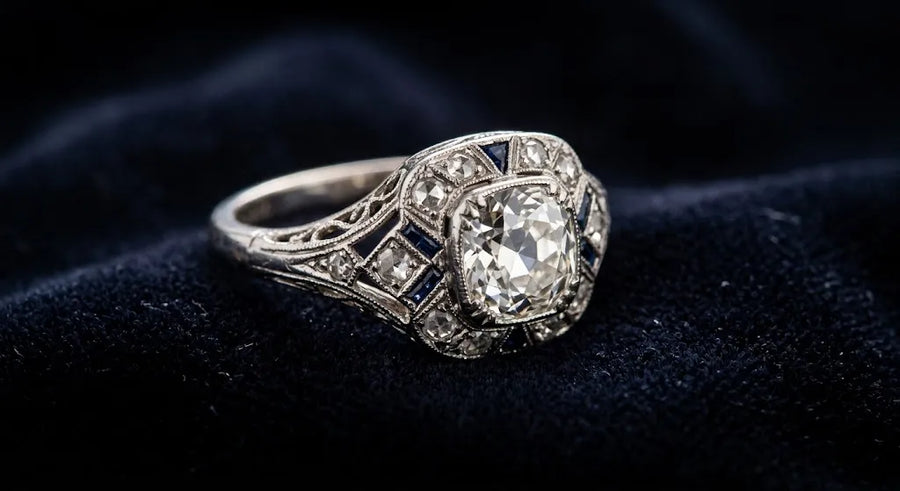
White gold is one of those jewelry terms that sounds completely self-explanatory.
It’s gold. It’s white. End of story—right?
Not quite.
White gold begins with yellow gold, usually gets its bright finish from another metal, and may slowly change color even when nothing is wrong with it. That doesn’t make it a poor choice. It simply means there’s more happening beneath the surface than its polished appearance suggests.
So, instead of another predictable metal-care guide, let’s clear up the assumptions that cause the most confusion.
Assumption No. 1: White Gold Is Naturally White
The first question to answer is what is white gold made of.
Pure gold is naturally yellow and too soft for most everyday jewelry. To create white gold, jewelers combine it with lighter-colored alloy metals, which may include palladium, silver, nickel, or other materials.
Fourteen-karat white gold contains 58.3% pure gold, while 18K contains 75%. The remaining percentage is made up of alloy metals that influence the jewelry’s strength, color, and feel.
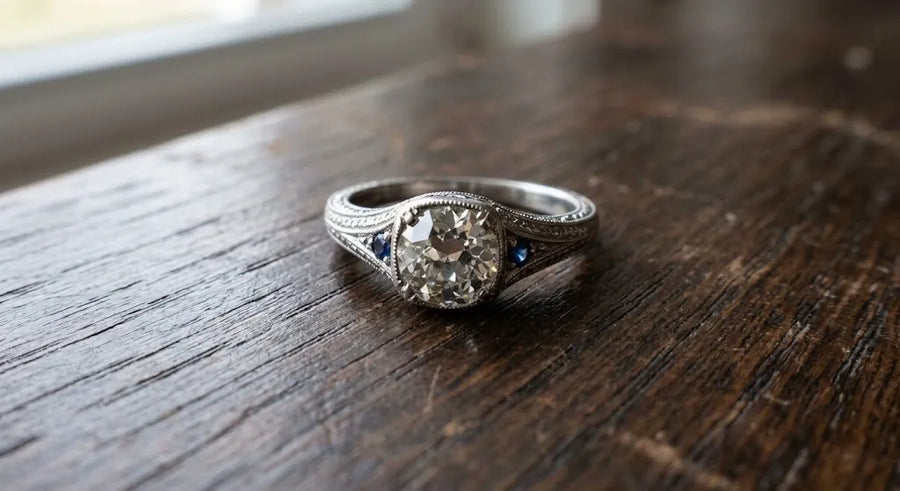
Even after those metals are added, the result usually isn’t the icy white shade people associate with a new engagement ring. The underlying alloy may have a soft gray, cream, or slightly warm tone.
That bright finish comes next.
Assumption No. 2: If White Gold Looks Yellow, Something Is Wrong
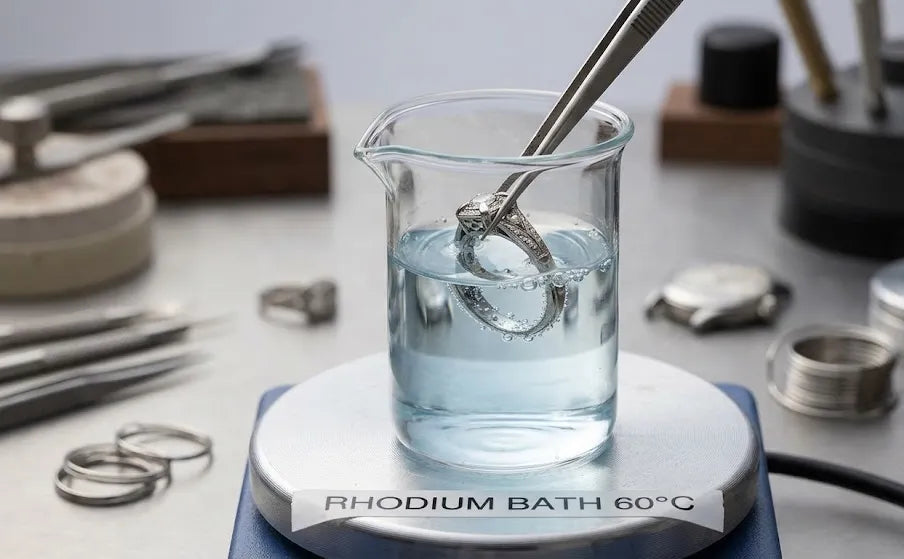
Most white gold jewelry receives a thin coating of rhodium, a bright white metal from the platinum family. Rhodium gives a ring its crisp, reflective appearance while adding some protection against daily wear.
But that coating isn’t permanent.
Hand washing, friction, lotions, cleaning products, and normal movement gradually wear it down. Rings usually show this change faster than necklaces or earrings because they come into contact with more surfaces.
When a warmer tone appears near the bottom of a band or around the edges, the gold itself hasn’t “gone bad.” You’re simply beginning to see more of the original alloy underneath.
This is why redipping white gold is considered routine maintenance, not a repair.
Assumption No. 3: “Redipping” Is a Complicated Process
The name makes the process sound more dramatic than it is.
During redipping white gold, a jeweler cleans the piece, polishes it when appropriate, and applies a fresh rhodium finish through an electroplating process. The result restores the bright white appearance many owners prefer.
There’s no universal schedule for how often it should be done.
Someone who wears a ring daily may notice the finish changing sooner than someone who wears white gold occasionally. Skin chemistry, work habits, cleaning routines, and the original plating can all affect how quickly rhodium wears.
Some people refresh their rings regularly. Others enjoy the softer tone that appears over time and wait longer. Neither approach is wrong.
Assumption No. 4: White Gold Should Stay Scratch-Free
Here’s the honest answer to do white gold scratch: yes.
So does yellow gold. So does platinum. Nearly every metal worn regularly will show signs of use.
A wedding band moves across desks, countertops, steering wheels, door handles, and countless other surfaces without us thinking about it. Small marks are part of everyday wear.
Karat can make a difference. Because 14K white gold contains a larger proportion of strengthening alloys than 18K, it is generally harder and may be a practical choice for someone who works with their hands.
Still, harder doesn’t mean scratch-proof.
The goal isn’t to keep a frequently worn ring looking untouched forever. It’s to avoid unnecessary damage and have the piece professionally maintained when the surface becomes noticeably dull or marked.
Assumption No. 5: A Fading Finish Lowers Its Worth
A ring that needs rhodium plating may look different, but the underlying gold content hasn’t disappeared.
The white gold value of a piece depends on several factors, including its karat purity, weight, craftsmanship, condition, design, and any diamonds or gemstones it contains. A custom or designer piece may also carry value beyond its raw metal content.
Rhodium primarily affects appearance. It doesn’t make 14K or 18K gold less valuable when the coating begins to fade.
It’s also useful to separate retail price, appraisal value, and resale value. They are not the same. An appraisal may estimate replacement cost for insurance, while resale value reflects what a buyer is willing to pay in the secondary market.
Understanding the white gold value of a specific piece usually requires more than checking how bright it looks.
What White Gold Actually Needs From You
Probably less than you think.
Most white gold jewelry can be cleaned gently with warm water, mild dish soap, and a soft brush. Harsh chemicals, chlorine, and abrasive cleaners are best avoided.
Remove rings before lifting weights, working with tools, swimming in chlorinated pools, or handling strong household cleaners. Store pieces separately so they don’t rub against harder jewelry or gemstones.
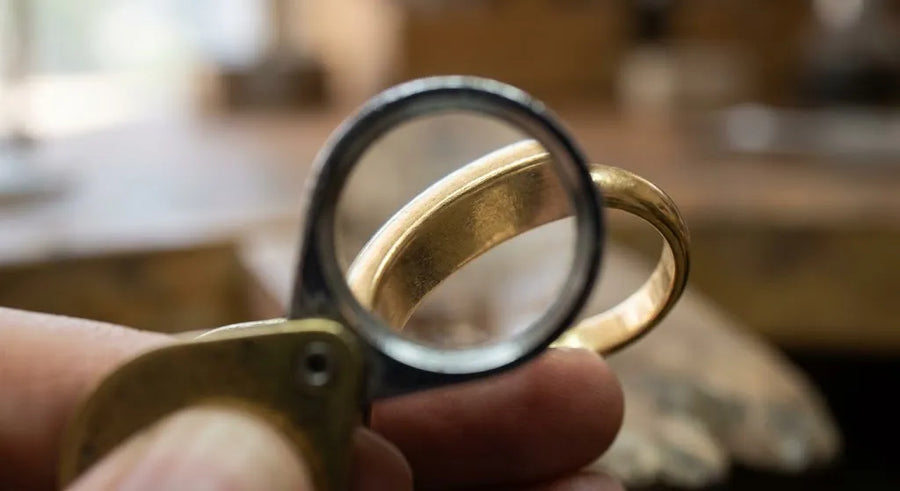
And every so often, let a jeweler inspect the piece. Professional care isn’t only about polishing. It gives someone the chance to check prongs, stones, and settings before a small issue becomes a missing diamond.
The Real Story of White Gold
White gold isn’t defective when its warmer undertone begins to show.
It is an alloy designed to combine the tradition of gold with a bright, modern appearance. Its rhodium finish may need refreshing, its surface will collect signs of wear, and its care needs will depend on how often it is worn.
Once you understand what is white gold made of and how the finish behaves, those changes become far less concerning. They are simply part of owning jewelry that was meant to leave the box and become part of your life.
Let Statement Jewelers Help You Care for Your White Gold
At Statement Jewelers, we help clients understand what their jewelry needs without making routine maintenance feel complicated. Whether your white gold ring needs cleaning, inspection, polishing, or a fresh rhodium finish, our team can evaluate the piece and recommend the appropriate care.
Because a ring that has been worn and loved shouldn’t be expected to look untouched. It should be cared for well enough to keep telling its story.