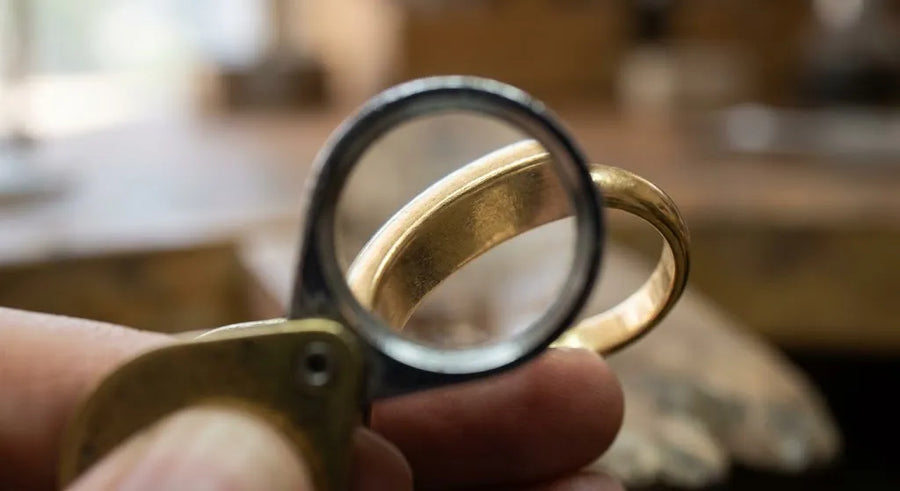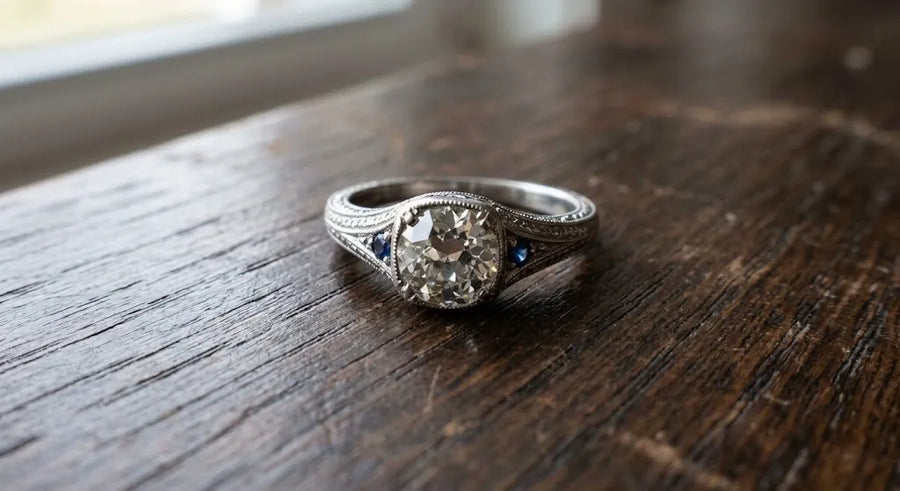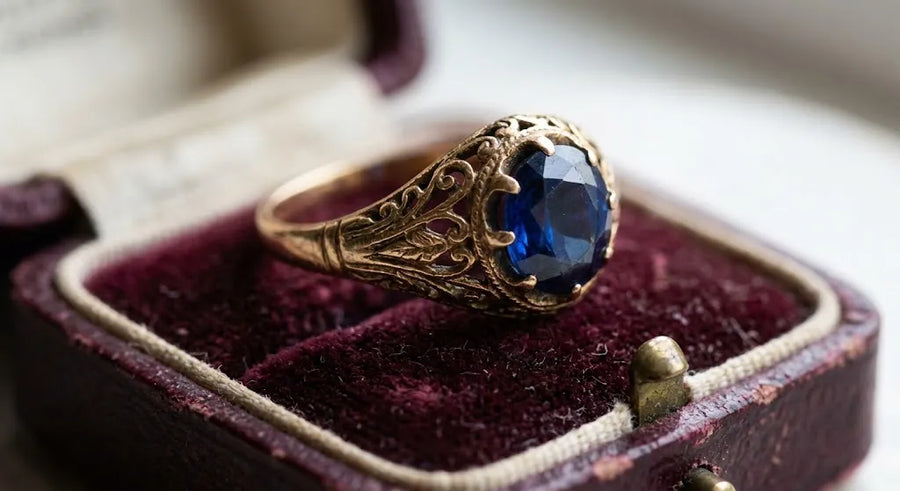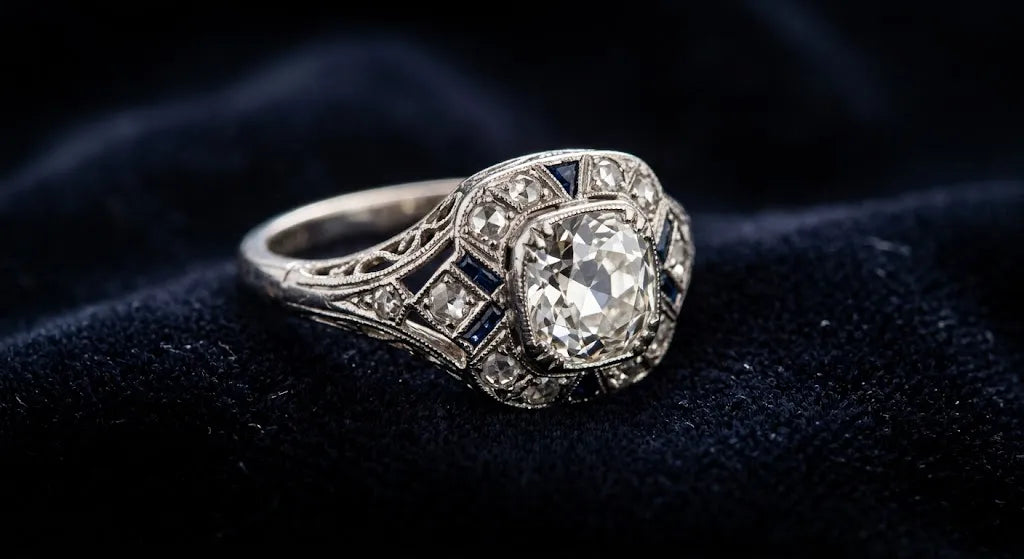
You’re looking at three rings in the same case. One is labeled “vintage.” Another says “antique.” The third is “estate.”
At first, those labels sound almost interchangeable. Old jewelry is old jewelry, right? Not exactly.
Age matters for some of these terms. Previous ownership matters for another. And one piece can sometimes fit more than one category at the same time. That’s why understanding vintage vs antique jewelry is less about memorizing definitions and more about knowing what each label is actually telling you.
Start With the Easiest One: What Is Estate Jewelry?
Here’s the part that surprises people most: estate jewelry doesn’t have to be especially old. The simplest answer to what is estate jewelry is jewelry that has been previously owned.
That could mean a ring from the 1920s. It could also mean a designer bracelet purchased five years ago and later resold. The word “estate” describes ownership history, not a specific age, which is why estate collections can feel so varied. You might find an older diamond ring beside a much more contemporary piece, and both belong there.
Estate Jewelry Is About Its Previous Life
A piece might enter the estate market through an inheritance, a private collection, a trade-in, or a resale. It may have been worn for decades or hardly worn at all. What connects those pieces is simple: someone owned them before you.
That previous life is part of the appeal. Estate jewelry can offer discontinued designs, unusual craftsmanship, older cuts, designer pieces, and styles you may not see in current collections.
So, What Counts as Vintage Jewelry?
Vintage is where age starts to matter more. The term is generally used for jewelry that is older but doesn’t yet meet the traditional threshold for antique classification. In practice, “vintage” often describes pieces from past decades that reflect the style, craftsmanship, or design language of their era.
Think Art Deco-inspired geometry, mid-century gold designs, or bold jewelry from the 1970s and 1980s. The exact age range can vary depending on who is using the term, which is why vintage is often less rigid than antique.
Vintage Usually Tells You Something About Style
When someone calls a piece vintage, they’re often talking about more than when it was made. They’re pointing to a period look.
That’s part of why vintage vs antique jewelry can be confusing. Both are older, but “vintage” often describes jewelry that feels connected to a recognizable design era without necessarily being old enough to qualify as antique.
What Is the Antique Jewelry Definition?
This is the category with the clearest age threshold. The traditional antique jewelry definition refers to jewelry that is at least 100 years old. So, in 2026, a piece made in 1926 or earlier would generally meet that age standard.
That doesn’t mean every 100-year-old piece is rare, valuable, or collectible. Age alone doesn’t create value. Condition, craftsmanship, maker, gemstones, originality, and demand still matter. But the 100-year benchmark gives “antique” a much more specific meaning than “vintage.”
Antique Jewelry Often Comes With More Context
An antique ring may reflect materials, cutting styles, metalwork, and setting techniques associated with the period in which it was made. That can make the piece interesting beyond appearance alone.
A Victorian ring, Edwardian platinum setting, or Art Deco diamond piece may carry details that are difficult to reproduce exactly today, especially when the original craftsmanship remains intact. That’s where age becomes more than a number.
Can One Piece Be Estate, Vintage, and Antique?
Yes, and this is where the terminology finally starts making sense.
Imagine a ring made in 1915. It’s over 100 years old, so it’s antique. It was previously owned, so it’s estate jewelry. Depending on how someone is speaking about the piece, they may also casually describe it as vintage, although “antique” is the more precise age-based term.
Now imagine a ring made in 1985. It may be considered vintage. If it was previously owned, it’s also estate jewelry, but it isn’t antique. And a ring made in 2020? If someone owned it before you, it can still be estate jewelry, but it wouldn’t usually be described as vintage or antique.
That overlap is the easiest way to remember the difference.
Vintage vs. Antique Jewelry: What Actually Matters When You’re Buying?
The label is useful, but it shouldn’t make the decision for you. A vintage ring isn’t automatically more valuable than a newer estate piece. An antique ring isn’t automatically better made. And estate jewelry isn’t automatically old.
Instead, look at the piece itself.
Ask About Age and Provenance
If the age matters to you, ask how it was determined. Documentation, maker’s marks, construction details, and design characteristics may all help establish a timeframe.
Look at Condition
Older jewelry can carry wear from decades of use. That doesn’t necessarily make it less desirable, but you’ll want to know whether repairs, stone replacement, resizing, or restoration have taken place.
Pay Attention to Originality
For certain antique and collectible pieces, original components can matter. A replaced stone, altered setting, or heavily modified design may affect how collectors view the piece.
Buy the Piece, Not the Label
This may be the most useful advice. A ring doesn’t become right for you simply because someone calls it antique.
If you love the design, the craftsmanship holds up, and you understand what you’re buying, the category becomes context rather than the entire reason to purchase.
A Simple Way to Remember the Difference
If you want the short version, estate jewelry tells you the piece was previously owned, vintage jewelry generally tells you the piece comes from an earlier era and reflects an older style or period, and antique jewelry tells you the piece is at least 100 years old.
That’s the distinction behind vintage vs antique jewelry, and it’s also why estate jewelry has a much broader answer than many people expect.
Explore Estate and Older Jewelry at Statement Jewelers
At Statement Jewelers, we love pieces with history, but we also believe the label should come with context. Whether you’re drawn to older craftsmanship, searching for a distinctive estate piece, or trying to understand whether a ring is vintage or antique, we can help you look at the details that matter: age, condition, materials, design, and what makes the piece worth a closer look.
Sometimes the best jewelry doesn’t feel new. It feels discovered.
EXPLORE ESTATE JEWELRY AT STATEMENT JEWELERS
FAQs
What is estate jewelry?
Estate jewelry is previously owned jewelry. It can be antique, vintage, or relatively modern.
What is the difference between vintage and antique jewelry?
Vintage jewelry generally comes from an earlier era but is not necessarily 100 years old. Antique jewelry is traditionally defined as being at least 100 years old.
Can estate jewelry be brand new?
It may be relatively recent, but it must have had a previous owner to be considered estate jewelry.
Is all antique jewelry estate jewelry?
If it has been previously owned, yes. Antique describes age, while estate describes ownership history.
Does antique jewelry always have more value?
No. Age alone doesn’t determine value. Condition, craftsmanship, maker, gemstones, rarity, originality, and market demand all play a role.